
Call us now :08071793724
 Send Inquiry
 Send Inquiry
Krone Modules
Price 100 INR/ Piece
MOQ : 50 Pieces
Krone Modules Specification
- Connectivity Type
- Wired
- Size
- Standard/Compact variations
- Model
- Krone LSA-PLUS Series
- Shelf Life
- Over 10 years under normal working conditions
- Frequency
- Supports voice and data frequencies
- Range
- Up to 1 km in telecom installations
- Mounting Type
- DIN rail or wall mounting
- Interface Type
- Punch down terminals
- Operating Temperature
- -20C to +70C
- Features
- Tool-less connection, reliable insulation displacement connection (IDC), corrosion resistant contacts
- Product Type
- Terminal Block (Krone Module)
- Application
- Telecommunication and networking termination
- Dimension (L*W*H)
- 101 mm x 21 mm x 37 mm (typical for 10-pair module)
- Material
- High-grade plastic and phosphor bronze contacts
- Weight
- Approx. 30g (for 10 pair module)
- Capacity
- Supports up to 10/16/20/8 pairs per module
- Coverage Area
- 10, 16, 20, or 8 pair modules available depending on application
- Flammability Rating
- UL94 V-0
- Color
- White base, color coded clips available
- Contact Resistance
- <2 m
- Environmental Compliance
- RoHS Compliant
- Dielectric Strength
- AC 1000V (1 min)
- Insertion Cycles
- 500+ cycles
- Insulation Resistance
- >1000 M at 500V DC
- Cable Type Supported
- Solid and stranded copper wires, 0.4-0.8 mm diameter
- Contact Material
- Phosphor bronze with tin or silver plating
- Number of Terminals
- 8, 10, 16, 20 pairs per block
Krone Modules Trade Information
- Minimum Order Quantity
- 50 Pieces
- Supply Ability
- 1000 Pieces Per Week
- Delivery Time
- 7 Days
Krone Modules About
A 10-pair Krone module is a specialized, compact terminal block widely used in telecommunications and structured cabling. It uses Insulation Displacement Connection (IDC) technology to securely terminate and manage up to 10 pairs of copper wires without requiring stripping or soldering.
Common Applications: Used in telephone exchanges to organize and route incoming lines.PBX/EPABX Systems: Standard for internal corporate telephone network extensions.Telecommunication Boxes: Snaps directly onto stainless steel back-mount frames inside indoor and outdoor junction boxes.
Reliable and Efficient Telecom Termination
Krone LSA-PLUS modules deliver a dependable and efficient solution for telecom and networking termination needs. Featuring reliable IDC (insulation displacement connection), the modules provide secure connections for both voice and data frequencies. The tool-less design enables swift installation, saving time and reducing labor costs in telecom infrastructure projects.
Built for Durability and Safety
Each Krone module is constructed from high-grade, flame-resistant plastic and corrosion-resistant phosphor bronze contacts. They meet stringent safety standards, such as UL94 V-0 flammability and RoHS compliance, ensuring longevity and environmental friendliness. With insulation resistance exceeding 1000 M and a dielectric strength of AC 1000V, these modules guarantee safe and stable operations.
Versatility for Diverse Applications
Available in capacities of 8, 10, 16, or 20 pairs per block, Krone modules accommodate a range of installation requirements. They support both solid and stranded copper wires and offer flexible mounting options for DIN rails or walls. Widely used in switch rooms, data centers, and telecom installations, they suit environments requiring up to 1 km range.
FAQ's of Krone Modules:
Q: How do I connect cables to the Krone LSA-PLUS modules?
A: You simply punch down solid or stranded copper wires (0.4-0.8 mm diameter) onto the module's insulated slots. The tool-less IDC (insulation displacement connection) design ensures a quick and secure connection without the need to strip wires beforehand.Q: What are the benefits of using phosphor bronze with tin or silver plating for contacts?
A: Phosphor bronze with tin or silver plating delivers excellent conductivity, corrosion resistance, and durability. This ensures reliable, long-lasting connections even in demanding telecom environments, maintaining low contact resistance throughout the module's lifespan.Q: When should I use a 10, 16, 20, or 8 pair Krone module?
A: The choice depends on your application's scale and wiring requirements. Use a higher pair module when handling more connections in one block, such as in large voice or data installations. Smaller pair modules are suitable for space-constrained setups or fewer line requirements.Q: Where can Krone LSA-PLUS modules be installed?
A: These modules are ideal for a variety of environments, including telecommunications switch rooms, networking closets, and data centers. They can be mounted on DIN rails or directly onto walls, providing flexible installation options based on your site needs.Q: What is the typical process for installing these modules in a telecom setup?
A: Installation involves mounting the module (on a wall or DIN rail), inserting cables into the designated slots, and using a punch down tool to secure wires via the IDC terminals. No soldering or screwing is required, making the process straightforward and efficient.Q: How do Krone modules maintain safety and operational reliability?
A: They conform to UL94 V-0 flammability ratings, offer high insulation resistance, withstand over 500 insertion cycles, and operate reliably between -20C and +70C. Combined with RoHS compliance, the modules ensure safety, longevity, and environmental responsibility.Q: What are the primary applications and connectivity benefits of these modules?
A: Krone modules are widely used for terminating wired connections in telecommunications and networking installations. They support both voice and data signals over distances up to 1 km, providing reliable, secure, and easy-to-maintain connectivity.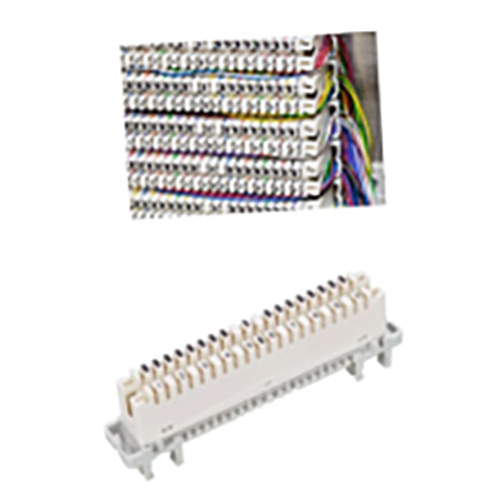
Tell us about your requirement

Price:
Quantity
Select Unit
- 50
- 100
- 200
- 250
- 500
- 1000+
Additional detail
Mobile number
Email

More Products in Telecom & IT Networking Products & Accessories Category
OTDR Meter
Price 25000 INR / Piece
Minimum Order Quantity : 1 Piece
Size : Handheld
Product Type : Optical Time Domain Reflectometer (OTDR)
Application : Fiber optic network testing, telecommunications, CATV maintenance
Weight : <2 kg
TELEPHONE CURLY CORDS & LINE CORDS
Price 30 INR / Piece
Minimum Order Quantity : 30 Pieces
Size : Standard RJ9, RJ11, RJ45 connectors, Length: 1m 5m (custom on request)
Product Type : Curly Cords & Flat Line Cords
Application : Telephone Handsets, Landline Telephones, PBX and Intercom Systems
Weight : Approx. 50200 grams depending on length
Fiber optic joint closure
Price 500 INR / Piece
Minimum Order Quantity : 20 Pieces
Size : Standard 48core closure
Product Type : Dome type fiber optic joint closure
Application : Fiber optic network jointing and splicing
Weight : Approx. 2.5 kg
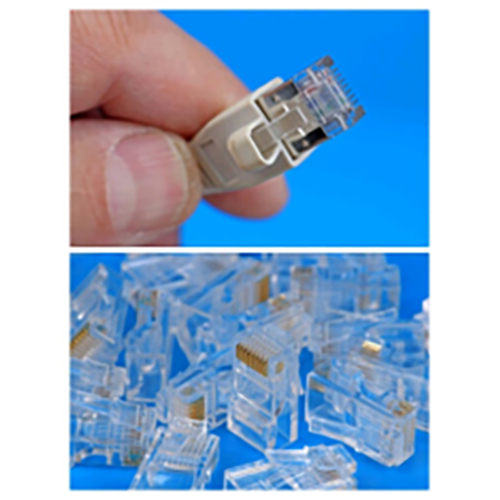
RJ45 CONNECTOR CAT6
Price 5 INR / Piece
Minimum Order Quantity : 100 Pieces
Size : Standard
Product Type : RJ45 Connector CAT6
Application : Ethernet Networking, LAN cabling, Data Transmission
Weight : 2g (approx per piece)

 Send Inquiry
Our Products

Shop No.18, Mayur Complex, Khodiyar Colony, Near Crystal Mall,Jamnagar - 361006, Gujarat, India

Mr Kantibhai A. Vadhvana
(Proprietor)
Mobile :08071793724
 Send Inquiry
 Send SMS
Developed and Managed by Infocom Network Private Limited.
